Tuesday, January 27, 2009

Relevant Writing

In light of the recent discussions we've been having on this blog and in the comments about "fluff" books and chick lit, I thought I would link you all over to this extremely intelligent viewpoint on the matter written by Joanne Rendell over at the Huffington Post.

In all our discussions here at Literary Transgressions about "fluff" and chick lit, we have yet to breach what might perhaps be the most basic aspect of the debate: gender. As a Smithie, I know it sounds woefully cliche to bring this up, but it seems to me that in all our ponderings about what makes chick lit today so derided and simply not respected, we have failed to look at the fact that most chick lit authors are women. Is there something more to be said there or is chick lit disrespected for other, more stylistic reasons?

Hot Town, Super in the City

Super in the City by Daphne Uviller is (Devil Wears Prada aside) my first true foray into what society at large has not-so-lovingly dubbed "chick lit." I must say that I was more inclined than most to read this book and even more inclined to like it, having become e-quainted with said author over the past few months (she just seems wonderful). And yet...?

The book's main flaw is its very genre. Chick lit is by nature infuriating with its rampant escapism, its unattainable alternate realities and, at the gushy heart of any chick lit book, its mythical One striding about in a very manful manner. It is nice to delve into and even disappear into this relatively tidy little world where you just know everything is going to eventually work out. It's peppy and comforting and wonderfully distracting, but it is not real. The moment you lift your nose out of any chick lit book's light pages, you immediately crash. On the cover of this book, Elizabeth Gilbert compares the novel to candy ("intelligent candy," mind you) and I think that is very much accurate of the genre. You get this happy little sugar rush reading and then, once done, you crash back to reality with very little residual buzz to show for your time. It's disheartening even as you were moments ago reveling in your sunny little chick lit world.

However, setting the main constraints of the genre itself aside, the book was not in and of itself at all bad. In fact, I just plain old liked it! There isn't anything really deeper to read into that or anything to really comment on why or why not, I just liked it. The book is the simple, friendly little tale of an extremely likable woman with the fantastic name of Zephyr Zuckerman. She merrily skips through the novel, going through a range of emotions and catastrophic situations before finally getting her perfect, rainbow over Manhattan happy ending. It's great.

Most simply, this book was a nice little moment of escapism and one that is not so far-fetched as to really hurt you when you come crashing back down from chick lit land. Ms. Uviller's writing style is utterly fantastic: intelligent without seeming pretentious (although, as a Yale graduate, she would have every right to be so), funny without hitting you over the head with the punchline and wonderfully real-feeling, even in its moments of greatest unreality. Zephyr honestly comes to life, as do the people she encounters along the way. I have absolutely no idea what other genre Zephyr might have more happily fit into (although judging by her preoccupation with romantic fantasies of the mind perhaps chick lit is the right place for her), but it might have been nice for Ms. Uviller to try out her debut writing chops on something equally shiny, equally nicely written but perhaps slightly more substantive.

Note: I actually wrote this review some weeks ago since I was beneficently given a review copy and, since then, I have slightly revised my thoughts on the book. This book stuck with me a surprisingly long time and I still find myself thinking about it sometimes, weeks later. While no one is going to confuse Super in the City with high literature, I must say this was a good, thoroughly likable book. Please do read it in your spare hours! It goes quickly and is quite an "upper."

Wednesday, January 21, 2009

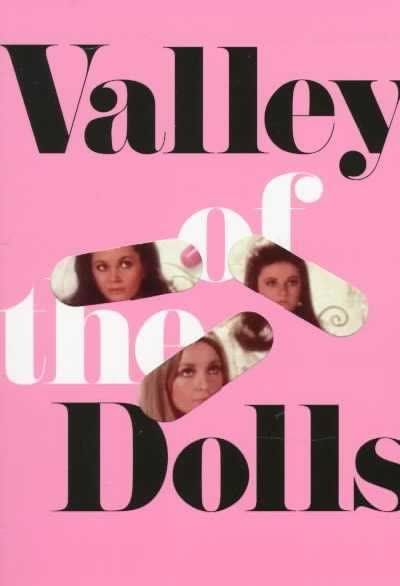
Valley of the Dolls, not the chicks


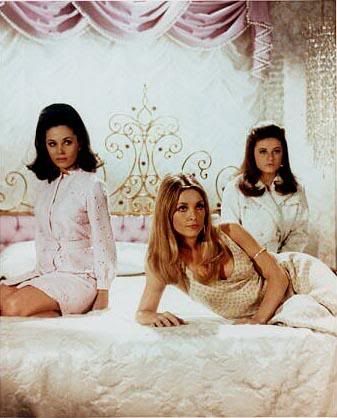
At first, I wasn't sure why Valley of the Dolls wasn't included in chick lit week for my literature course. After all, it has a pink cover, follows three young women through various career arcs and romances, and has enough sex to qualify. Plenty of handsome men and beautiful girls to go around.

But from the first chapter, I knew that Valley was in a category apart for certain. Though Anne, the main character in the first part of the book, is beautiful and pursued by a millionaire, Jacqueline Susann sets a tone in the beginning that makes the reader feel as though Anne's life is much more real than any chick lit protagonist could ever hope to be. Though a millionaire wants to marry her, she lives in a singularly squalid one-room apartment; and though her boyfriend seems to be a sweet, unremarkable young man, it is soon revealed that he is, in fact, connected with a lotof money gained through very dubious means.

We discussed chick lit a lot in our course, at least during the class assigned to it, and we came to the conclusion that though they are regarded as 'fluff,' they do deal with important issues such as body image, female self-worth, shopping addiction, and the angst inherent in being a single 30-something in London. Still, a lot of us were left with a vague sense of contempt for the genre, though we were unable to articulate it when the professor asked, 'How can you call this fluff if it deals with these issues?'

But Valley of the Dolls answers his question clearly. I could never call Valley 'fluff'; though it was popular, and therefore it has the stigma of common approval, it is also a complex, raw examination of show business, women, relationhips, and what people will do to protect what they think is valuable.

Valley deals with addiction (mainly to pills, called 'dolls'). It deals with body image (all three of the characters make livings off of their bodies). It deals with being single, or rather not being able to get who you want, until you finally get them and realize it's not enough. It deals with the horror of having to take six Seconal and still not being able to sleep; it addresses cancer, insanity, fame, fortune, love and adultery.

And it does it all at the same time.

Chick lit can only deal with one issue per book, sometimes per series. Jemima J is about body image. Full stop. It doesn't bother to delve into the disturbing fact that Ben only likes Jemima after she's skinny. Confessions of a Shopaholic and the rest of the series is about shopping addiction and debt, as well as the possible involvement of the financial industry. Slightly more complex, but as everything always works out okay for Becky Bloomwood, you can hardly say this is an intense examination.

Bridget Jones's Diary does deal with a few more issues, including judging by appearances, trying to find self-worth in the midst of a society that tells you you're worth nothing without a husband, the falsity of tabloid journalism and the demerits of weighing under 9 stone. However, Bridget Jones is the best of the bunch, and everything ends with a happy ending that doesn't quite ring true.

Valley, with all of its glamour and glitz, never feels false. Despite the blockbuster sensationalism of the subject matter, Susann has a firm grip on what feels real and what a simply realistic ending would be, based on the character's pervious actions and tragic flaws. Pessimistic, possibly -- but then it definitely escapes the dreaded moniker of 'fluff.'

Friday, January 16, 2009

What goes around comes around

When I said earlier that Edward Rutherford’s epic The Forest didn’t deserve its own post, I was just plain wrong and lumping it rather unfortunately in with other books I read towards the end of 2008. Having now finished the volume, I can say that, more than Rutherford’s other books, this one most certainly deserves its own post. I say this not because The Forest is so far superior to its compatriots, but because this one was so much more unreliable in its quality.

I have without reservation been merrily recommending Edward Rutherford to just about anyone who would listen since the latter half of high school. “Read anything by him,” I would say excitedly, “It will all be brilliant!” While that might well be the case with both London and, perhaps even more truthfully, Sarum, I am very disappointed to report that Mr. Rutherford lost his swing in this particular tome. The Forest tells the story of, simply put, the New Forest located in the south of England. As with all Rutherford novels, this one successfully covers centuries of history by stopping every hundred years or so in various time periods and examining the people who are found there. Another Rutherford trademark is unsurprisingly present in The Forest: he follows five or six select families in the given region as he skips about through time, checks in with their descendants and makes little winky mentions of previous forebears as he goes through time.

This format may sound at best like a tedious exercise in attempting to bring the past to life for the ordinary reader (who cannot really be expected to really feel for someone living in 1614 without personifying 1614 with Alice Albion, for example). However, tedium is simply not a part of the Rutherford formula. Despite the book’s simplistic formula (and Mr. Rutherford unfailingly follows it in every chapter), Mr. Rutherford possesses the unique ability to quickly sum up a time period (quite accurately most of the time), introduce/define some characters and get on with the plot in such a way that the book never lags. At least, that is the goal. And one that he admirably attains in his previous works (the aforementioned Sarum and London among others).

However, he does not truly make it work in this book. The first half of the book is charming and interesting as any other Rutherford novel, but as he enters the seventeenth century, his ability to make it all interesting apparently just deserts him and the reader is dragged through an increasingly uninteresting and distended piece about the Stuarts, the unfair trial of Alice Lisle and Oliver Cromwell. One can easily see that Mr. Rutherford did some research, discovered Alice Lisle and then thought it would be just wonderful if he could incorporate her into his novel, which he did at much detriment to the novel itself. The story of Alice Lisle is quite interesting on its own simply because of the extreme injustice done to poor old Alice, but the whole retelling just comes off as forced and more than a little dull in Mr. Rutherford’s attempts to force his families into the mix. I admit I struggled woefully for weeks through that unending chapter about the seventeenth century and emerged from it liking Mr. Rutherford and his book rather less and hating the Stuarts and Oliver Cromwell about equally as per usual.

That said, Mr. Rutherford does manage an impressive save after the unfortunate “Alice” chapter by bringing the late eighteenth century and a Jane Austen-like chapter into play directly thereafter (“Albion Park”). One of the things that makes Mr. Rutherford's book so interesting is how his tone changes to match the time period he has entered in every chapter. While there is a calm, descriptive even-handedness pervasive throughout the book, Mr. Rutherford is also very much aware of literary styles of any given time period and relishes in morphing into them a little bit. He disappears almost entirely in Jane Austen for his “Albion Park” chapter and it is a very enjoyable exercise.

The book lags a little bit in the chapters after “Albion Park,” but he never truly loses himself as he did in the seventeenth century. His Victorian section seems a little pointless and plotless (more of a character study and familial check-up than anything) and his tacked-on 1920s and 1980s narratives make you wish the book had just ended in “Albion Park.”

Despite these shortcomings, the book is still an impressive feat of historical research and this is an area Mr. Rutherford clearly loves. I would more readily recommend his other, earlier novels, but this one was good enough. Even if he somehow lost his magic touch to make everything fascinating, the book is still an interesting study in history and how a place changes over time. This may not be enough to tempt most readers into taking on this epic (indeed, I might not have bothered if I had known that it was not Sarum-like in its excellence), but it is a great accomplishment nonetheless.

Sunday, January 4, 2009

Take Out the Trash Day

It's come to my attention that I have four books sitting in my "shelf," all of which I have spent considerable time with over the past month, and all of which I was planning on blogging extensively about. However, I have recently written papers on all of them and am still a little burned out. So, in the spirit of the new year, I have decided to write one short post summing up all I have to say, and then completely refresh my shelf.

Lady Audley's Secret is on there first, and was originally meant to go with The Great God Pan. Lady Audley's secret is about a young lady named Lucy Graham who appears as if from nowhere and marries a baronet at least 20 years her senior. All is well and good until her new step-nephew arrives with a friend in tow. This friend disappears, presumably murdered, and the nephew goes on a hunt to discover the truth about Lady Audley.

The Great God Pan is about a doctor who punches a hole in a patient's head in an attempt to make her see what is 'beyond the veil,' or what he calls the Great God Pan. The woman becomes an idiot. 20 years later, reports of mysterious deaths in London lead several men to investigate the results of this old experiment. Their explorations lead them to one Helen Vaughn, a young woman whose origins are hazy.

The main things these books have in common are young women who succeed in society, and men who die or almost die as a result. Also, men who investigate with the intention of taking down these succeeding women. I meant to explore the idea that while more scandalous than earlier novels, what with their emphasis on murder and sex, they are in essence socially conservative. No woman who rises under false pretenses, or by using unorthodox methods, is suffered to live. Therefore, the overarching message of these books is that society will bring down any woman who attempts to use her sexuality or any other power within her means to rise in society is a threat, and must necessarily be brought down. Sounds pretty conservative to me.

The Coral Island and Alice's Adventures in Wonderland also went together for me, and while I was going to write a big long post on identity and consumption, what I am going to say is merely that people love food, people define themselves through what they will and will not eat, and certainly this is even more true for children, who are just realizing who they are or who they want to be.

If you read Alice carefully, you can see that she is often refused food (the tarts, tea with the Hatter and Hare) in an attempt to teach her self-restraint, and any time she does eat, she is thrown into a state of physical and emotional confusion. In the beginning when she drinks the potion and eats the cake, she is so thrown by her dramatic physical changes that she cries, wonders who she is, and essentially loses her identity.

For the boys on Coral Island, food is a way to reassert their British identities. In redefining the coconut-juice and breadfruit they find on their island as lemonade and wheaten bread, they show their unwillingness to part from the familiar, and in rejecting the notion of cannibalism as practiced by the natives, they make the natives an "other," opposed to the Crown and who must either be conquered or converted.

So there you have it. All I was going to say about four books, in one simple post. Relatively painless, yeah?

Tuesday, December 30, 2008

And guess what, Jane? Fairy tales aren't real.


Hey readers! I have finally got around to a book review -- well, a rant/book review, in letter form, a la the Mercy review from a while back. Enjoy~

Dear Jane Green,

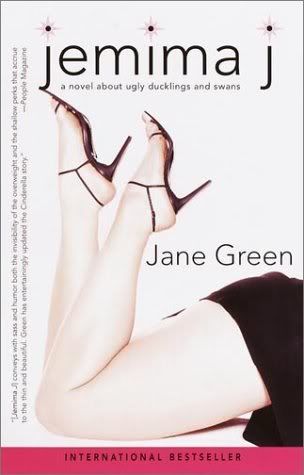
How could you? How could you write a book like Jemima J?

I have to assume that you are an intelligent woman, because, in general, writing is hard, and writing a novel is even harder. You have somehow managed to come up with an okay plot, some decent characters, and even played around a little bit with narration and perspective. You're also British, which, as we all know, makes you at least sound smarter than us kooky New-Worlders.

But you have obviously missed the memo on some very important facts of life, and I find myself in the awkward position of both wanting to kill you and wanting to take you aside and have a nice, deep heart-to-heart with you. Since I obviously can't, I will instead have to settle for writing you a cyber-letter, a letter which you will never read, but will make me feel infinitely better for having gotten my incredible anger off my chest.

So, Jane (can I call you Jane?), here are just a few of the things I feel you should know:

1) Not all fat girls are funny. I see why you would like to think so, Jane, and we would all like to think that everyone has one redeeming factor that could make someone fall in love with them, and for fat girls, it's easy to say that they have excellent personalities, or are sarcastically funny. In fact, it's almost realistic, because so often people who are insecure use sarcasm or other forms of humor as defense mechanisms.

I thought you were really, really close to getting to the 'some people are just mean' idea, as well as the 'just because someone's fat doesn't mean she's a good person deep inside' theory, when you introduced Jenny the surly PA. But as it turns out, Jenny is a delightful person, who also nabs the dream guy. Too bad, Jane. Too bad.

2) Not everyone would be striking if they just lost some weight. Guess what, Jane? I know you're beautiful (nice picture on the jacket, by the way), but here's a news flash: some people are just dogs. There are no two ways about it. There are plenty of skinny, ugly girls out there, plenty of average-sized ugly girls, and plenty of people who are just kind of middling. Paul the graphics dude drawing in some cheekbones on Jemima is not enough to convince me that she would, in fact, be a babe if she lost 90 pounds.

And shame on you for telling fat girls that if they would only exert a little effort, lose a little bit of weight, they'd be turning heads in Starbucks. That is so untrue, I can't even express to you how completely false it is. It's almost as outrageous as telling women that if they just lost a stone or two, they would finally get that promotion, those designer clothes -- which you also seem to think will actually happen, judging from your novel.

3) Not every girl gets the guy. Jane, have you ever heard of a spinster? That's right, that's a woman who never marries, usually because no one wanted to marry them. Sometimes they have a terrible past, like Miss Havisham, but more often than not they are just women who were left over when everyone else paired off. Just because some chick loses weight does not mean she is going to get the guy of her dreams, and it is just so wrong of you to suggest that someone should change everything about herself on the off chance that the guy of her dreams will fall in love with her.

For every Jemima, there is an average girl somewhere, pining after some gorgeous guy who will never notice she exists. Eventually, said average girl will settle, not for the hot young TV presenter, but for some balding 40-year-old man. Or maybe for an overweight World of Warcraft aficionado with Cheez Doodle stains on his t-shirt. But Jane, she will settle, or buy thirty cats and live alone in an apartment for the rest of her sad, lonely life. Those are her choices.

4) Not all almost-virgins are good in bed. Let's be real, Jane. There's a reason virgins are virgins. It's because either no one wants to have sex with them, or they're so freaked out about the possibility that they might blow it (not in that way) that they put off sex as long as possible. Or they're religious, but let's put that option aside for the moment. Either way, the first time one of these girls has sex is going to be an awkward, messy, possibly painful experience. It is not all doing the reverse cowgirl on some mind-blowing hottie, whom they will later shag on a desk, a fur rug, and in an elevator. Life is just not that fair.

5) The Perfect Guy isn't ever perfect. Now, Jane, I know what you are thinking. You are thinking that I'm totally wrong, because you have met your knight in shining armor (sorry, armour, to you) and he is wonderful and fantastic and everything you dreamed, which is why you dedicated your book to him. That's nice. But I don't believe it for one bloody second.

You have created this character, Ben Williams, and he is certainly delightful in every way. Ben is too delightful. Ben doesn't even have the flaws requisite in a Nora Roberts character. Ben never leaves his socks on the floor. Ben collects original vintage political cartoons. Ben drinks Becks from the bottle, wearing an impeccable suit and watching the news. Ben is adorably awkward, and actually utters the phrase: "Er, yes. Quite." Ben the deputy news editor is so hot every woman in London is absolutely gagging to be with him, yet he remains blissfully unaware of his hotness and is just waiting for the right girl.

But what is most important in our darling Benjamin's life? Becoming a BBC newsreader, and hanging out with the junior reporters on staff. Oh, and being incredibly sweet to the fat girl. Whom he will later shag, but only after she's turned into the babe of his dreams.

The above are just some basic things I think you should be aware of, dear Jane. You are a good writer -- hell, I stuck with you for 300 pages while you blithered on about Jemima's weight loss regime and how amazingly sweet Mr. Deputy News Editor is. I think it's cool that you played off of the little Brad/Jennifer thing -- I am assuming Brad Pitt and Jennifer Aniston were together when you wrote this? At any rate, even if it's just a coincidence, I enjoyed it.

And, to be fair, I enjoyed that Jemima lost the weight, I enjoyed that she got the guy, I enjoyed the makeover, and I enjoyed that she was happy with herself. What I didn't enjoy was the letdown when I closed the book -- the letdown as I realized that life wasn't actually like this, that no one loses 90 pounds in three months, that a guy like Ben Williams would never notice Jemima J, and that not every girl is a diamond in the rough.

So thanks for giving me four hours of escape to a world where anything is possible, but maybe next time you could get a tighter grip on reality and possibly write a book worth rereading.

Thanks,
Disgruntled Reader

PS: Americans get sarcasm fine, thanks. There's no need to be snarky about it.
PPS: Are you aware that your main concept is a lot like Jennifer Weiner's in Good in Bed? Just curious.

Tuesday, December 23, 2008

'Tis in my memory lock'd...

I’ve read a few books in the past month or so, mainly topping off half-read books that have collected dust over the past two years. While none of them seemed to really merit their own post, I sat and tried to think of some meaningful common theme or thread that would connect them and thus allow me to post about all of them at once. I’ll give you their titles and you tell me if you can come up with one: Peter the Great: A Biography, The Museum Guard and The Forest. Anything? I was stuck in a similar situation of no continuity. The best and most pathetic result of my thinking was “history.” The common thread of history. Pitiful, I know.

Or is it really so? Forgive me, but I would argue that the common thread of history connects much more than three books pretty obviously about that subject. The Forest by Edward Rutherford aptly illustrates this perhaps obvious point. It is an epic work of historic nonfiction that fascinatingly traipses through centuries of English history focused in and around the New Forest in southern England (near Salisbury, the setting of one of his other wonderful and similarly formatted books, Sarum). The book moves through the centuries briefly pausing every two hundred years or so to look in on the evolution of a given place, a few chosen families and the country’s broader history. The book is comprised of little snapshots and while each chapter is equally interesting and Rutherford undeniably excels at quickly creating fully-formed characters one can’t help but care about, the broader point the book makes is that while we all go about our lives and seem so unrelated and so different, a common history unites us all, and oftentimes even more common and closer than you think. Rutherford makes the subtle point that history is more important than just for studying; it shapes who we are and who we become as a people, as individuals and as families. Even without active knowledge of the past—a mode in which most of his characters blithely exist—history undeniably moves us.

The Museum Guard by Howard Norman concurs with the point that history is very much an active presence. His book is more character study than novel and tells the story of DeFoe Russett, a museum guard of a small, local art museum in Halifax called the Glace Museum. DeFoe’s simple existence is utterly unraveled (seriously, our even-keeled art lover is by the end of the book to be found in prison) when a certain painting arrives at the Glace Museum. The painting depicts a woman standing outside of a hotel in Amsterdam holding a loaf of bread and it proceeds to change all the character’s life in ways big and small. The book broadly deals with the onset of World War II, jewishness and how art can affect our lives, but DeFoe is most moved by two things: the premature death of his parents in a local zeppelin crash and the strange transformation undergone by his lover inspired by the painting. Both these events are deeply rooted in history: the zeppelin crash that killed his parents becomes part of the local history, dehumanizing the event for DeFoe even as he most sorely still personally feels the aftermath, and his lover retreats from reality into the historical moment portrayed in the painting. History is another character in the book; the common local history, the feeling throughout the book clearly felt by all the characters that they are witnessing history as Hitler begins his rampage through Europe and the actual withdrawal into history by DeFoe’s lover all reiterate the point that history is no passive afterthought. History is everywhere, informing decisions, moving action and forcing retrospection.

Of these three books, perhaps no protagonist (or subject, in this case) most sorely feels the pull and judgment of history than Peter in Peter the Great: A Biography by Lindsey Hughes. Of all the people in the books, Peter is by far the most aware of history as an entity. Rutherford’s characters primarily simply exist, at best only partially informed of what has come before through folklore or rumor. Norman’s DeFoe is primarily uninformed and only speaks to the history that he himself has experienced. But, as Hughes argues, Peter the Great was extremely conscious of the importance of history and strove constantly to make sure he was remembered properly and regarded well in the annals of history that came thereafter. Not only that, Hughes makes the argument at the end of her book that while Peter himself was involved in his own making of history, the Romanovs who held the throne after him were very much aware of the political importance and usefulness of history, using Peter’s memory and image well into the twentieth century to prove to their followers (and detractors) how good they really were for Russia. History was seen and used as a legitimization of the present because it still felt so relevant and so real. History was not something mustily confined to books no one read. History was real and it was everywhere.

Call this review an attempt to proselytize by a former history major, but history is too often mistaken for something unimportant, easily forgotten and rarely studied. I believe it is far more relevant to today than most people would give it credit for. As Rutherford shows through his study of the centuries, history is undeniably everywhere, even in the commonest or simplest story. Every moment is history. Life is entirely made up of interlocking disciplines and to forget any one among them, history particularly in my opinion, or to dismiss any one as irrelevant to the present, is not simply lamentable, it is inexplicable. Anything can create a connection and history does daily.