Thursday, May 29, 2008

So I lied.

This post was not even hinted at in the last one, and that's because my mother has taken up the habit of shoving books in my hands and being like, "Here! Read this! You'll really like it!" Most of these books involve young Amish people dealing with love and life in the order, but once in a while she actually choses a good one.

The latest novel she demanded I read was The Friday Night Knitting Club. I’m always kind of skeptical about novels that revolve around handicrafts, and here’s why: their target audience is almost always middle-aged Southern Baptist moms who are looking for something to read before bed.

That’s fine, especially if you happen to be a middle-aged Southern Baptist mom, but that’s not me and, as such, I never enjoy that kind of book. But Kate Jacobs seems to have taken the traditional form of the handicraft novel and tweaked it just enough to make it interesting.

The book is clichéd, yes. There are reunited fathers and daughters, pregnancies, and trips to find relatives abroad. But it’s not a Christian romance novel, and people actually cheat on their husbands, make sweaters that don’t fit and afghans that are really ugly, explore the tricky subject of race (albeit briefly and a little unconvincingly), and discuss the importance of gynecological appointments for sexually active senior citizens.

Because of those slightly different aspects, I got the feeling that Jacobs was trying very hard not to fall into the feel-good novel trap. This is most likely why she peppered her writing with very mild swear words that she probably felt gave her writing a hip edge. I don’t believe Kate Jacobs ever actually uses the word “damn” in real life, and I think she relies on it to bring validity and realism to her dialog, when it actually does just the opposite.

Still, she gets points for being pretty gutsy later in the novel. At the risk of revealing a spoiler, let’s just say that when something very terrible happens to a very loveable character, Jacobs lets it run its full, purely realistic course without trying to make much sense of it or imbue it with a moral lesson. Shit happens, Jacobs seems to say, and sometimes there’s not a reason. Though there are a few soppy scenes surrounding the incident (and throughout the novel), it was genuinely gut-wrenching without being preachy or too emotionally manipulative. Way to be -- definitely a book worth borrowing.

Saturday, May 24, 2008

Coming Soon to a Blog Near You

My internet access will be touch and go until sometime next week, but here's a brief look at what's coming once I get settled:

-- A special romance novels post, highlighting three "best of the worst" (or is it worst of the worst?) novels from various series. Most of them involve inheritances that are about to be lost, the need for green cards, sexual abuse, and pregnancy.

-- A review of The Undomestic Goddess by Sophie Kinsella. Not a bad book, all in all, but not really for serious literary people. You'll see what I mean.

-- A half-review and a pondering of The Eye of Jade by Diane Wei Liang. It's a half-review because I didn't finish the book. You'll see why.

-- Other reviews, including The Coffee Trader by David Liss, Gentlemen and Players by Joanne Harris, a book about interpreting body language, and whatever else my parents gave me for graduation.

I'm also debating tweaking the subject matter of this blog to make it exclusively about bad books, or books I expect to be bad, which seems more in keeping with the title but would narrow the field a bit. On the other hand, bad books are always easier to write about and more fun to read, so maybe I'd actually post more. Hmm.

Friday, May 16, 2008

Sharp Teeth

"We are wolves," Cutter chants
in his mind.
"We don't find the weak. We
don't prey on the slow.
We simply eat absolutely
fucking everything."

I first heard about this book in Mother Jones, where they interviewed the author, Toby Barlow. After hearing what it was about (werewolves in L.A.) and desperate for a good book during my last week here, I ran out to the library and tracked down a copy. So excited that I found it, I settled back in my nest chair, opened to the first page....and let out a cry of dismay.

Poetry.
The whole thing is an epic free verse poem. Now, I hate poetry with a passion. I think that most post-modern poetry is pretentious, narcissistic and cliched. But this book sounded so good, and it was shelved with the novels (rather than poetry or, God forbid, sci-fi) so I decided to give it a go.

And it was amazing. Eight pages in I already couldn't put it down. This book grabbed me and held me and wouldn't let me go until I finished all 308 pages of lyrical wonderfulness.

The language is excellent -- this free verse isn't Walt Whitman-style, with huge long sentences that don't give your brain a chance to keep up. Barlow writes in snippets, almost, little snapshots of information that really are perfect for grabbing and keeping one's attention. Even I, with my tendency to unconsciously speed-read, didn't skim for at least the first 250 pages (a miraculous feat, really). To give you an idea of the length of the lines, I actually had to count to make sure it wasn't blank verse.

The poetry also gives Barlow a chance to be more flowery than he would be able to in a novel of this sort. If he had written in prose, it might have been a good book, an okay book -- but it would have simultaneously have been overwrought and underemotional. There would have been too many unnecessary words and we would have been following around a pack of dead-inside dog/humans who have little to no beauty in their world.

But the poetry allows Barlow to dwell on how wonderful it is to be with someone and feel safe, the joy of living the life of a surfer in Santa Cruz, and how beautiful the moon is. And all without being too sappy, because it's tempered by the depictions of how utterly violent these characters are. The second one of Barlow's characters pulls out a chain saw, all soppiness is pretty much gone.

The characters are amazing, too, and coupled with a twisted plot that comes together almost seamlessly (though it suffers a little, I think, because of the form of the novel itself), this makes for one seriously impressive debut novel. Rumor has it that the film rights have been bought and screenwriters are working on it now -- though Barlow told Mother Jones that he doesn't think it will work, I think it's at least worth a shot.

Sunday, April 20, 2008

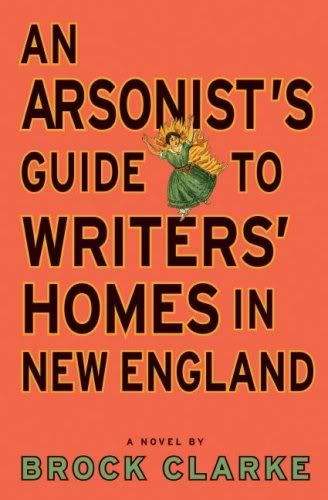
A Reader's Guide to a Wacky Post-Modernist Novel

"She went to see my grandma...my other grandma," he said. "I have another grandma?" How to describe the way Christian said this? How to describe a five-year-old boy who finds out that he has two sets of grandparents and not just one? How to describe a boy who discovers that his father has for years and years lied about his own parents' being dead? And how to describe a father who doesn't think that, in killing off his parents, he has killed his children's grandparents in the bargain?

It's like Brock Clarke had a dream about a guy who burned down the Emily Dickinson house, went to jail, and had a lot of things happen that he can't make sense of. Following the plot is like being stuck in a dream of your own, with only a vague idea of how the ideas connect and how you got where you are.

The best part of this book is the main character, Sam Pulsifer. Sam is the most bumbling protagonist I've seen in quite a while, who gets himself into the weirdest situations possible but in such a fundamentally real way that it seems almost plausible.

That is to say, Sam himself is real (contrary to what another character will say somewhere in the middle), but his world is about as surreal as it gets. Bond analysts who write novels about other people's lives? The son of the people he killed shows up and steals his wife? Someone starts copy-catting his Emily Dickinson bonfire? Bizzare.

But unlike in Invisible Monsters, I think the characters and the motivations are realistic, and Sam's bewilderment at the events of the novel just help solidify that. He doesn't know how the wife-stealing happened, he's not even sure how he got his wife to marry him in the first place, so the feelings of the reader are confirmed by that of the protagonist himself.

Brock Clarke is headed for something amazing; this book is good, but not his masterpiece. I think even he would admit that this novel is better than his last one, Ordinary White Boy -- in fact, Clarke has his protagonist poke fun at that book in the middle of this one. Though he's not quite there yet, look out when he makes it, because he's going to be one of the best post-modern novelists out there.

Tuesday, April 15, 2008

Silly Rabbit, books are for kids!

You know what I miss? Reading silly young adult novels without being judged. Come on, we all read some really, really lame books when we were younger, or at least I did. But because it's spring, and I'm in a silly and nostalgic mood, I thought I'd talk about some of the books that stand out in my mind from those years when I read everything I could get my hands on...none of which I'd be caught dead reading now, but really loved at the time.

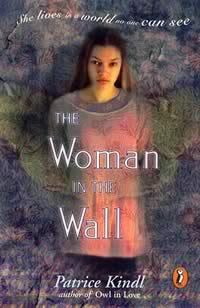
Woman in the Wall by Patrice Kindl
This was my favorite book for a year or two. Never mind that there's no way a seven-year-old girl could build a whole living space within the walls of her house only using the tools her dead father left behind, let alone that her family would be cool with this. But I get the metaphor, though I didn't at the time -- it's hard to miss the moth/cocoon connection later in the story, and this book is really too bizarre to be taken literally by anyone but the very earnest young reader I was.

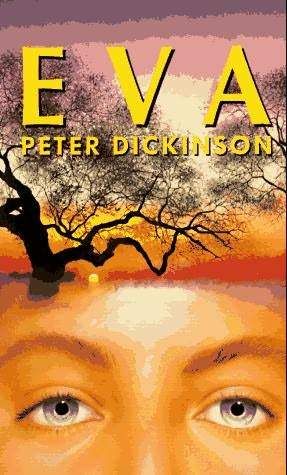
Eva by Peter Dickinson
I checked this book out of the library at least six times over the course of my pre-adolescent years. Now that I know it's not actually that easy to transplant a young girl's brain into that of a chimpanzee, it has lost some of its charm, yeah. It's probably not even scientific enough to be science fiction. Nothing is really resolved in the end, except maybe something about environmentalism and that we're all just animals anyway and probably we shouldn't be so cruel as to ignore animals lost in scientific progress. Or something. It's probably important to note that this was written in the 1980s.

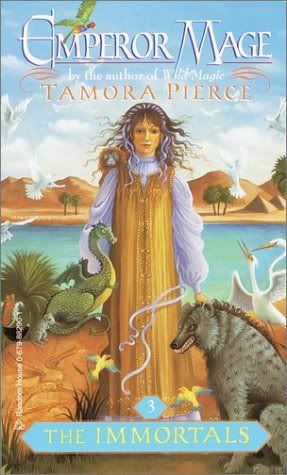
Emperor Mage by Tamora Pierce
Another book about a teenage girl who does something really, really cool. Sensing a theme here? This was my favorite book ever until I had the imagination beaten out of me by serious literary criticism and an interest in journalism. I mean, come on. The girl speaks to animals, has the ability to turn into one if she wants, and at some point resurrects the bones of dinosaurs to storm a castle. There's not much out there that can compete with that. In retrospect, I think I might have liked the story of Wolf Speaker, its prequel, better, but this is the one where she starts to shape-shift, which I thought was pretty amazing, without any of the creepiness of the Animorphs series that was kind of popular at the time.

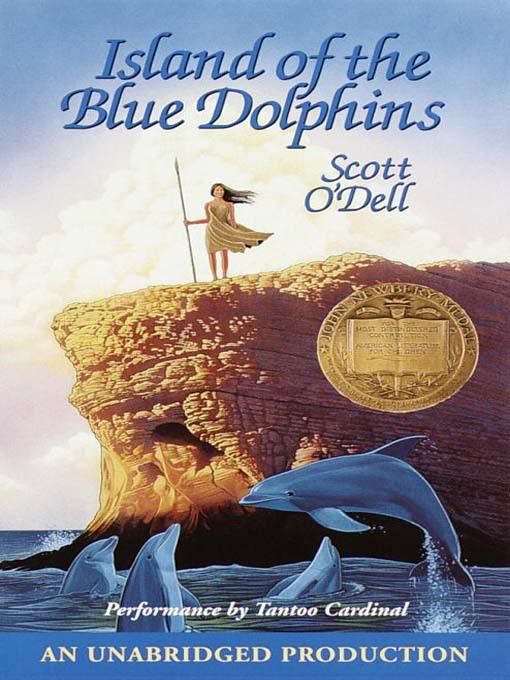
Island of the Blue Dolphins by Scott O'Dell
Wolf-Woman
by Sherryl Jordan
The Music of Dolphins
by Karen Hesse
So I was fascinated by survival stories, especially ones that involved animals in some form. I also went through a really long wolf-loving phase that reached its peak in middle school, so of course a book about a girl who was partly raised by wolves (in conjunction with the girl who can talk to them -- see above) was just about my favorite thing ever. But dolphins were pretty cool, too, as anyone who's ever bought a Lisa Frank folder can tell you, so that explains the others.

Monday, April 7, 2008

Live from the Library

So, I was thinking today (as I sat in the Buffalo and Erie County Public Library trying to look unapproachable) that there are probably very few book topics left out there that haven't been used. That in itself is depressing enough, since I would guess that "very few" is more like "none." But what's more depressing is that there are so few topics out there anyway, especially for fiction.

Leaving aside the greats and the classics, let's go with mass-appeal fiction. There are a few categories I can come up with off the top of my head:

Historical. Divided into:
a) thrillers in which a person overcomes the limits set by their time period and solves some mystery full of intrigue and murder. If the person is male, this is seen as unremarkable, though eccentric. If the person is female, every other character will remark on how it's unseemly.
b) romances. More on this later. Often these will be half history, half fantasy. See below.
c) pseudo-biographical, meaning the author was too lazy or too entrenched in the creative process to write an actual biography.

Romance. Oh boy. These are the worst. There are:
a) pseudo-pornographic. These exist solely to use raunchy metaphors and to embarrass women when they (the books, not the women) fall out of one's purse in public. Identified by their oddly similar and yet completely lifeless characters. Bonus points for checkered pasts, including run-ins with the law and previous sexual abuse, the damage from which is undone by a mind-blowing orgasm around page 20.
b) artsy-fartsy. These pretend to be literature (judging by the covers), but when you read them, it's the same old thing. Fewer metaphors and less embarrassing, but no less predictable.
c) Christian. More on this later. MUCH less sex. That is to say none at all beyond longing glances and passionate hand brushes.

Sci-fi/Fantasy. I am smashing these two together despite my better judgment, only because they are shelved together. These include:
a) romances in all categories, except generally Christian. Usually these will take place in either a castle in a made-up kingdom, or in some solar system where the planets are warring and there's a lot of death and zipping around in spaceships. Sometimes there are people who can turn into/talk with animals. That's always a plus.
b) "concept" novels. As in, wouldn't it be interesting if....fill in the blank. Like what if Homo Erectus didn't become extinct/the South won the war. Usually the idea is okay, the story is not.
c) pseudo-historical. Often these involve Arthur and magic, but sometimes there are cave people.
d) "prophetical." Generally preaching about what could happen if...fill in the blank. We don't stop global warming, we micro-manage the population, etc. Sometimes these are Christian (Left Behind), other times they are not (Brave New World, etc).

Horror. Often found in the mystery section, but also can be found in fantasy, sci-fi, or sometimes maybe romance. These almost all involve monsters, ghosts, psychopaths or other things that go bump in the night.

"Redemption" novels. Someone bad turns good. Usually this someone also overcomes an obstacle of some sort that was holding them back. Can be found in all other categories.

"Anti-redemption" novels. Someone bad tries to turn good, fails. Or dies while attempting to surmount an obstacle, which usually makes it a redemption novel, but not always. Can be found in all other categories.

Mystery. Someone solves something, often while in the midst of a historical/made-up world, romantic entanglement, or personal conversion (religious or otherwise).

Christian. Oh boy. Here's the run-down:
a) Historical. These are either in a time or place where Christianity is oppressed, or where everyone is Christian except the bitter man/woman/war vet/cowboy/spinster school teacher. Eventually he/she will find the Lord and all will be well, the kingdom saved, war ended, sheep sheared, etc.
b) Romance. Same as above, sometimes historical, but will always end with the bitter atheist finding love and the Lord at the same time. Usually there are children.
c) Sci-fi/Fantasy. With the exception of C.S. Lewis, these combine the worst of the two genres. I've never really run into a stereotypical sci-fi novel with life on other planets and such, but I can tell you that usually there are thrillers with odd breezes and evil spiritual forces that try to bring down the believer. Someone converts.
d) Horror. Again, from what I've seen it's usually more thriller-y than anything else, but I'm willing to bet there's Christian horror out there that I have missed. No doubt some of Satan's minions come stalk the earth, only to be overcome by a kindly priest and a couple who has brought each other to the Lord and fallen in love in the process of conquering evil. Sensing a theme?

My battery's about to die. But my point is, there's nothing left to write. Nothing. I'm willing to bet that every book, with the exception of the greats (eh, not even all of them), fits into these categories. Good luck finding one -- or writing one -- that isn't ;)

Saturday, March 29, 2008

Book Slut

Ha! I would so dump a guy if it turned out he hated reading or, at the very least, wasn't willing to hear me expound on Salinger every once in a while. Apparently, I'm not the only one:

http://www.nytimes.com/2008/03/30/books/review/Donadio-t.html

I know this is becoming more of a "highlights of the New York Times Book section" than a literature blog, but things have been crazy. I promise, more when I've finished The Grapes of Wrath, Sula, and all that stuff on Virginia Woolf's mental illness. I've also got some Harry Turtledove and An Arsonist's Guide to Writers' Homes in New England on the back burner, so look for those soon.