Friday, October 3, 2008

Works in Progress

I've been a little busy -- not so busy, though, that it's kept me from buying six books in two weeks, and starting reading three of them. Here's what you can expect in the upcoming weeks, as well as a few tidbits about my purchases recently:

* Arthur & George by Julian Barnes -- I picked this up for 1 euro at Charlie Byrne's in Galway, which I viewed as fate, since a friend and I had just been talking about it. It's about Sir Arthur Conan Doyle and George Edalji, and since it was shortlisted for the Man Booker Prize, I'm guessing it's pretty decent.

* Harry Potter and the Half-Blood Prince by J.K. Rowling -- I couldn't resist picking this up at some bargain-basement/thrift store in Galway, especially with a two and a half hour train ride ahead of me. I won't review this one, but I'm loving the chance to read it again and pick up on all the stuff I missed earlier. I am kind of glad I waited on Harry Potter until most of the buzz was over...it's giving me the chance to read it without getting caught up in the frenzy and judge objectively how good the series is and how likely it is to last.

* The Blind Assassin by Margaret Atwood -- I am deeply in love with Margaret Atwood. Actually, I kind of want to be her. She is one of the most versitile and original writers, and when she finds her stride, everything that comes from her pen is so beautifully written and so true that I can hardly tear myself away. This book is getting a review once I finish it, and once I find the time. Oh, and by the way, read Oryx and Crake if you like dystopian novels, and The Robber Bride if you don't. Also, The Edible Woman was my favorite Atwood for a long time, and even though it's her first novel, it's well worth reading.

* The Romance of the Forest by Anne Radcliffe -- The Gothic novel that spawned all other Gothic novels! Radcliffe was so popular in her day, and she was enough of an influence on literature that Jane Austen felt the need to take the piss out of her (heh -- pardon my Irish) in Northanger Abbey. Can't wait to start this one!

* Chocolat by Jonanne Harris -- I won't review this one, I don't think, since I've already read it, but I would recommend it, even to people who have seen the movie. It's different from the movie, but it's really fun and better-written; even though I loved the film, the book is better. I'm a big fan of Joanne Harris, especially Gentlemen and Players, but this one comes a close second.

* Christmas Books by Charles Dickens -- Okay, this one is just bragging, but I was so freaking excited...I found an edition of this book at the Temple Bar Book Market for six euro, and was excited enough just to find an old copy of a Dickens book. Then I opened the cover, and read this: "Xmas 1903 / To Dear James / with best wishes / MOC". The copyright date is 1894, the condition is beautiful, and I was so thrilled I couldn't stop from grinning as I paid the lady running the stall. She probably thought I was crazy, but then most people here do, so I'm not worried about it.

* Great Expectations by Charles Dickens. As read by Hugh Laurie -- I found this set of 3 CDs tucked away in the corner of the Classics section of Hodges Figgis, and I grabbed it like it was a gold nugget. And I suppose it is, even though I'm sure millions of copies are out there, this was the first I had seen, and I didn't even know it existed. It was also the last one on the shelf, so for all I know, it could have been a direct gift from God, dropped there to reward me for actually going through with this crazy-ass idea to move to another country and get a master's. Then again, if it was a heavenly gift, I suppose it wouldn't have had an ISBN or, ya know, a price tag on it...anyway, I cannot WAIT to listen to this, and it might actually inspire an entry on Great Expectations, so be looking for that! Note: There is a an audio version of this on iTunes, but not read by Hugh Laurie, so I don't know if it's worth it.

Thursday, September 18, 2008

Take Me Away

Those of you who know me (which is, um, all of you) know that I have moved about three, maybe four times since January and am about to move again to a city which I’ve never been to. As much as I’d like to think of myself as a free-spirited, wild-eyed rover, that is really about as far away from my true personality as possible. So obviously, I feel the need to escape from the sheer panic induced by words like “plane” and “airport” and “moving boxes” and “luggage.” Me being me, I bury myself in a book.

This is cheesy, but all of you already know this on some level – books create worlds of their own. They are reflections of how the author thinks the world works, or how the world could work with a few modifications. With enough modifications, the author can create a world of their own, and then the book could become science fiction or fantasy, depending on how in depth the modifications are and the direction they take the novel.

So, my reading life lately has been all about escaping this world for alternative ones. Here’s what I’ve been turning to instead of dealing with the trials of my everyday life:

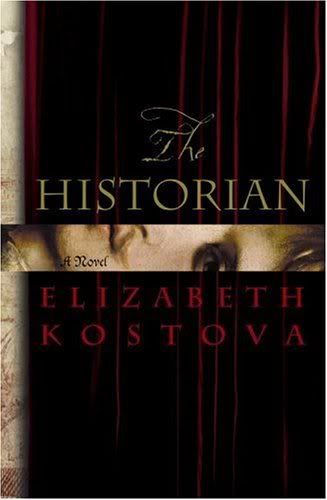
The Historian by Elizabeth Kostova

This, I think, is the best book ever to read in an airport. The chapters are relatively short, and the beginning and end are very exciting, and the middle is marginally so. What this means for you is that as you’re waiting for your flight to take off, you will be totally engrossed in the novel, but not so engrossed that you can’t fall asleep during a long flight. You’ll have plenty of the novel to occupy you during a layover, and then enough to keep you awake during a short flight that you don’t want to drop off during.

This novel is a mostly prewar vampire hunt, in which two graduate students, prompted by the disappearance of a professor, go to hunt down Dracula’s tomb. The story is told in the form of the one graduate student telling his daughter what happened, letters the professor left before his disappearance, and the daughter filling in narration from her own vampire hunt that resulted from her father’s. It’s amazing – even if the first time I read it, I did have to give up in the middle and try again. It does take a little focus, but if you’re in an airport, you have nothing but time and nothing else to focus on.

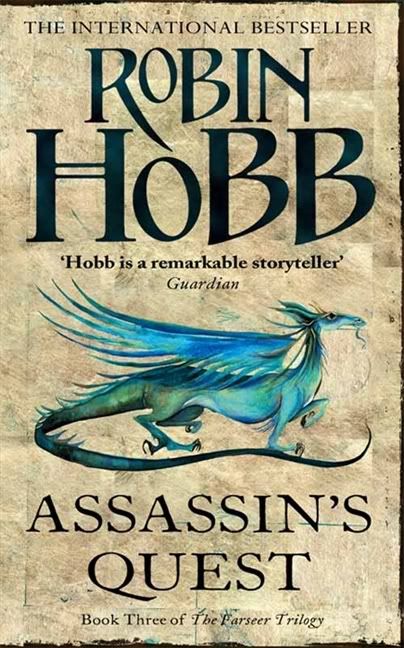
The Farseer Trilogy by Robin Hobb

Okay, I’ll admit it – I’m a fantasy nerd. Like, so big of a fantasy nerd that I have to keep myself from reading it, or it’s all I’d read. In fact, when I found Robin Hobb, her books are all I did read for the course of a few months.

I actually got into her Farseer books from her book Golden Fool, which has some of the same characters but not the same plot line. The trilogy is basically about this young boy named FitzChivalry (oh, I know) who is the lovechild (mm-hmm) of the late and lamented Prince Chivalry and some woman from the mountain country. Turns out that not only can Fitz communicate with animals and perform some pretty powerful magic, he has what it takes to be the official Royal Assassin and help Prince Verity and King Shrewd keep their kingdom from being taken over.

I don’t even remember whom, exactly, they are fighting – all I know is that Fitz makes friends with a wolf puppy named Nighteyes somewhere in the second book. From then on I was hooked. Probably not a book to really read in public unless you don’t care if other people judge your reading choices.

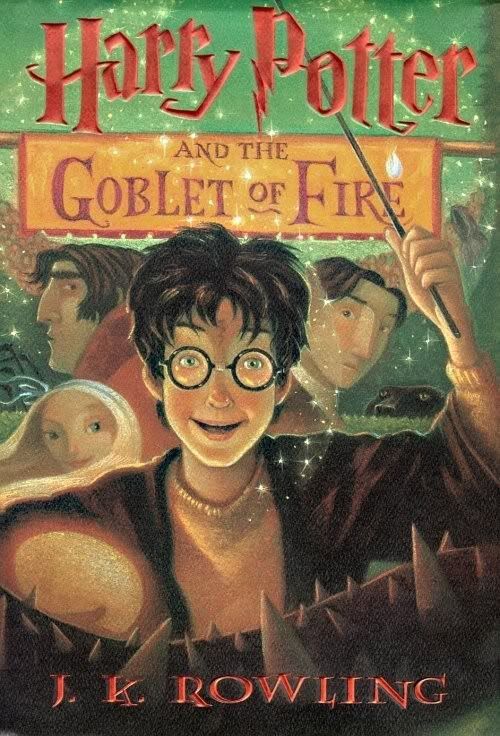
Harry Potter and the Goblet of Fire by J.K. Rowling

I just put that title down for the sake of naming a specific Harry Potter book; really any of them will do, but I tend to prefer the later ones for escapism. I enjoy Goblet of Fire because it isn’t nearly as dark as Order of the Phoenix, all the good characters are still alive, and Harry isn’t quite an obnoxious teenager yet.

Half-Blood Prince, though, would also be good, or Prisoner of Azkaban – just note that the later ones are a little more sophisticated than the first few, which makes them better suited to the purpose of keeping your attention for a longer period of time. And I don’t know about you, but I can never remember exactly the way the book turns out, even if I’ve read it before, so there’s always that element of suspense.

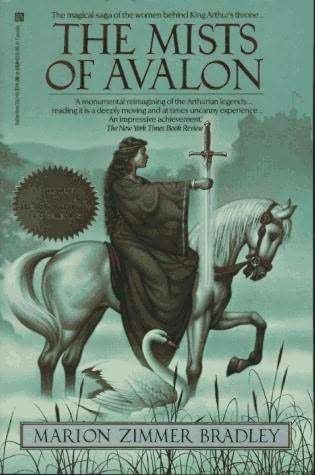
The Mists of Avalon by Marion Zimmer Bradley

Wow, is this a book that sucks you in and won’t let go. It’s a retelling of Authurian myth but with an emphasis on goddess worship and Lancelot’s heritage as the son of the Lady of the Lake. Here’s my only caveat: I haven’t read this whole book, and what I did read was a long time ago.

However, this is more the exception that proves the rule, as the only reason I didn’t finish it was because I was in my uber-Christian high school years, and couldn’t separate the fact that I thought goddess worship was wrong from the fact that maybe it was okay in the context of the book and, you know, for fictional characters. I am going to go back to it, though, once I have the chance, because I remember being so drawn in, that I could barely make myself stop. I did, though, because this is what good Christian girls are supposed to do, resist heresy and Satan in all his forms, even if that form is a really, really interesting book. This is also why I didn’t read Harry Potter until I was almost 20, but that’s another story.

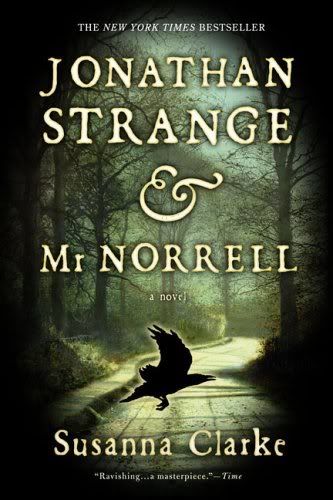
Jonathan Strange and Mr. Norrell by Susanna Clarke

The only book in this list that I have barely even started, but that’s because I am saving it for the inevitable breakdown that will surely follow my move to Dublin. I need an extraordinarily good book to keep me occupied between the time my mother drops me off at Buffalo’s airport and the time I finally settle into life at Trinity, a period of anywhere from a week to two months (after which I will fly back to California, only to have to make that adjustment all over again. Yay fun).

But this really isn’t about me complaining – I think this novel will do the trick, as it’s about magic returning to England during the Napoleanic Wars and, apparently, a rivalry between two magicians. And hey, Neil Gaiman liked it, and I like Neil Gaiman, so who am I to doubt his word?

Monday, September 8, 2008

What's the story, morning glory?


Or, in other words, what is going on with the total lack of posting? In case you are wondering, yes, I am planning on posting more in the future, but my moving around so much is making it hard to blog, even when I read wonderfully ridiculous books like The Monk that are sooooo worth writing about.

I will be off line for much of next week and probably too busy to blog for another two weeks after that, but I will continue to write posts on my computer and actually post them when I get the chance.

Speaking of which, I'll blog about it later, but if you have the chance, read The Monk and just try not to laugh your ass off. Yeah, it moves a little slowly, but you're allowed to skim, since you don't have to read the whole thing for class like I did. It's better than a Harlequin romance, I swear. I felt like I was getting away with something when I read it in public, that's how salacious it was. There is a love child -- that's all I'll say.

Thursday, August 21, 2008

Comfort Reading

As I come closer to the end of the summer and the beginning of graduate school, I am finding myself getting more and more apprehensive about my future. And, like many others, when I get nervous, I eat. Or at least cook – sometimes the only cure for a bad case of nerves is to pound a cup of toasted slivered almonds into crumbs for a batch of Almond Cookies. It’s amazing what fifteen minutes with a rolling pin and a Ziploc bag full of nuts can do for your sanity.

But I can’t cook all the time, and I’d rather not gain the freshman fifteen before I become a first-year again, so sometimes I have to replace the rolling pin with a book. Here are my “comfort foods” of literature, some chicken noodle soup for your soul, if you will, but a little more literally (and a little less annoyingly – does anyone else hate those books like I do?):

The Fourth Star by Lisa Brenner
This book follows the staff of Daniel, a formerly four-star New York restaurant that was bumped down to three stars when a new food critic came to the New York Times. The staff tries desperately over the course of a year to gain back that last star, and reporter Lisa Brenner shadows them in all aspects, from front of the house service to back of the house food preparation.

It really impresses me how much Ms Brenner manages to cram into this book, and how much real dialogue she is able to capture. I felt as though maybe this book could have been more like a movie or a TV show, what with all of the drama and action in there. It’s one of my favorites, and a definite must-read.

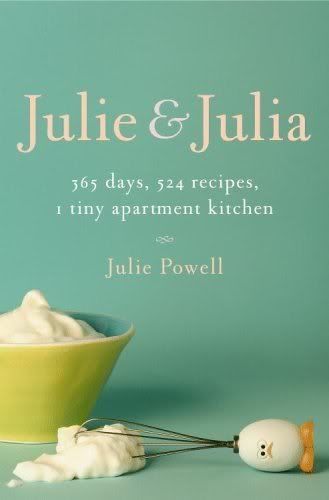
Julie and Julia by Julie Powell
Julie and Julia is the story of Julie Powell, who comes to a crisis when she is told she has a hormonal imbalance that will make it hard for her to have children if she doesn’t do it soon. This, of course, in typical Sex and the City fashion, makes Ms Powell feel as though she has done nothing useful with her life. Her husband suggests she go to culinary school, and Ms Powell retorts that if she wanted to learn to cook, she would just work her way through Julia Child’s Mastering the Art of French Cooking.

And the rest is history. A copy of the book is procured, a blog is started, and ingredients like beef marrow and squab start appearing in the Powell kitchen. The book is well-written; Ms Powell is kind of abrasive at times, but her redeeming factor is that she is aware of her tendency to overreact and there is generally a little undertone of either amusement or shame when she recounts her more dramatic episodes. I didn’t think the pieces of Julia Child’s life that punctuate the book were strictly necessary, but I also didn’t think there was anything really wrong with them – I just found Julie’s life more interesting than Julia’s.

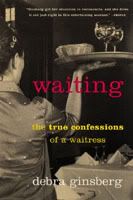
Waiting by Debra Ginsberg
I think everyone should read one book on waitressing or restaurants in the course of their lives, and preferably sooner than later. Though it’s nearly impossible to fully understand the things servers have to put up with from clients and back of house staff alike without actually ever working as one, reading one book like this will convince you that servers work a lot harder than most of us give them credit for.

I have read a few blogs by servers that are amusing and enlightening, and one thing that seems common to all of them is the lament that people simply don’t know how to behave when they go out to eat. Poor tipping, over-the-top demands and the inability of parents to control their children are the main topics that get these servers steamed up.

Debra Ginsberg also gets rather angry throughout the course of the book, but since she breaks up her rants with stories about working in a diner and a few bars, as well as statistics on tipping and other matters, she’s much more readable than many of the server blogs out there. She also clearly defines characters, as if writing a novel, which many bloggers don’t. However, if you’re still interested, check out Waiter Rant, The Insane Waiter and I Serve Idiots (I know he tells you to go to a different URL, but that address is defunct).

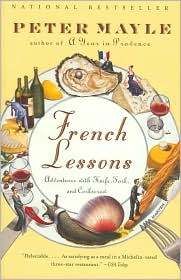
French Lessons by Peter Mayle
I am pretty sure this is the first food book I ever read, so it’s on here for the purpose of nostalgia, if nothing else. How can I neglect the author who taught me that truffles are mushrooms, not just little balls of chocolate, and yes, people really do eat and enjoy snails?

Mr Mayle begins the book with a story about traveling to France for the first time and sampling their version of the British classic, fish and chips. This first meal is like a revelation to him, as British food is notoriously bad, and French food is notoriously awesome.

The Gourmet Cookbook, edited by Ruth Reichel
It is impossible for me to resist a bargain, which is how I ended up taking this book home with me from a discount store. I used to read Gourmet magazine, and having read Ms Reichel’s Garlic and Sapphires and Tender at the Bone, I knew at least the preface of this cookbook would be worth reading.

It was, of course, but the rest of the book proved just as amazing. As promised on the back of the dust jacket, this is, in fact, the only cookbook I think I will ever need. Short of pulling a Julie and Julia-type cooking marathon with Gourmet, I know I will never work my way through everything it has to offer. Still, I can try...red wine risotto, anyone?

Friday, August 8, 2008

Summer Lovin'

It’s August, and suddenly the carefree “summer will last forever!” attitude I had all through July is completely gone. Far from amassing fun summer reads that I pile in corners of my shared room and imagine myself absorbed in on a beach somewhere, I find myself buying school books on Amazon and looking at John Steinbeck in used bookstores. Yuck.

So, as a last hurrah, I bring you three books from my “summer smut” reading list:

The Birth of Venus by Sarah Dunant

Actually a fairly decent novel, both plot-wise and…otherwise. Not overly smutty, but not really lacking it ether. The basic idea here is that Alessandra falls in love with a young painter who is working on the frescos for her family’s chapel. In order to keep herself out of a convent, she agrees to marry a much older man who turns out to be her older brother’s lover. Awkward.

I think we can all see what’s going to happen with the painter here. While he is straight out of a marginal romance novel, he also has enough quirks too keep his character interesting. And since Alessandra and he only meet a few times, there’s enough plot in between to keep this novel a novel, and not a romance. Nice work, Ms. Dunant.

A Private Hotel for Gentle Ladies by Ellen Cooney

Charlotte, who is recently recovered from a form of polio, discovers that her husband is having an affair and finds herself in a hotel where the male employees are mainly employed to “service” the clientele. Yep. That’s it.

The main problem with this book is that Cooney feels the need to burst into flashbacks in the middle of very exciting scenes. I could barely keep track of it all, and the flashbacks weren’t even interesting. It got to the point where I would scream in frustration when I saw one coming. Also, there is something about a stolen identity involving the main male character, and something else involving a police chief that was, in my mind, never really resolved. Not even worth borrowing, and certainly not worth the 99 cents I paid for it at a thrift store.

The Bridges of Madison County by Robert James Waller

Okay, according to a review that was tucked into the pages of this book, I was supposed to be sobbing my eyes out by the end. I didn’t even well up -- and keep in mind that I burst into tears during the season finale of So You Think You Can Dance the other night.

While I may have speed-read it, and I can certainly understand that is really quite tragic to fall in love with a free-wheeling photographer who you only know for a week when your family is at the Iowa State Fair, only to have to sacrifice what could be the world’s greatest love affair to remain in Iowa with aforesaid family, it’s kind of…eh. I had a very hard time believing it, to be honest.

Sure, it’s sad that this woman will never have mind-blowing sex again, and had I not been distracted I might have cried somewhere near the end-slash-middle region (you’ll see if you read it), it’s sadder to me that this woman ever left Italy in the first place than that now she’s stuck in Iowa. She made her choice long ago, and it shouldn’t be such a great tragedy now that she’s being forced to live it.

Though, to give Mr. Waller his due, the thing with the bathtub was a nice touch.

Chick Lit: The books, not the gum

Sophie Kinsella is one of those authors whose prose you can spot a mile away. She’s undeniably British, her characters are humorously self-effacing, and her stories generally start with a crazy situation and end with a kind of fairy tale satisfaction. Here, because they’ve been sitting on my floor for weeks as I put off writing this post, are two of her works that prove my point:

The Undomestic Goddess

Samantha Sweeting, despite her crazy name, is quite possibly my favorite chic lit protagonist, and here’s why: she’s a high-powered lawyer with a huge firm in London, with an amazing work ethic, a drive to be the best, and a potential offer for partner in her firm. Unfortunately, as these things go, she finds an overdue memo on her desk, loses a client 50 million pounds (approximately 100 million dollars), and finds herself working as a housekeeper in the Cotswolds.

That premise was enough to make me spring the 75 cents at my local Goodwill for a decent secondhand copy. And okay, so the end was a little cutesy and you know from the second he walks into the kitchen and smells the burning chickpeas that the handsome gardener will fall for Samantha. But it was also pretty gutsy, in its own small way.

Samantha is pulled between menial but satisfying work as a housekeeper, and her glittering career as a corporate attorney. And as a rule, books like this leave me cheering for the protagonist as she undergoes her spiritual journey or whatever and realizes that she deserves to be an attorney because she’s smart, damn it, and she should use her Ivy League education.

Not this time – and while I think that probably a more satisfying ending could have worked out, I do admire the emotional realism of the one Kinsella used (if not realism regarding the odds of a handsome, college-educated, pub-owning, lawyer-hating gardener coming to London to search for his lady love, who he has recently realized has been lying to him about her identity for several months).

Cocktails for Three (as Madeline Wickham)

My first impression of the book was that a soon-to-be-mother should not be drinking cocktails at all, let alone three, and that apparently that is not as taboo in Britain as it is here. Wow.

The main plot is that Candice is reunited with a girl from high school whose father was ruined by Candice’s father’s shady business dealings. Candice makes an attempt to make up with this girl by getting her a job, moving her into her apartment, and generally letting herself be taken advantage of in every way. She is egged on by her across-the-hall neighbor, while her friends, Maggie and Roxanne, deal with a baby and the death of a long-term clandestine lover, respectively.

It’s safe to say that this is an earlier book of Kinsella’s (who writes under the name Wickham for this book). The protagonists aren’t as sparkly as Becky Bloomwood and Samantha Sweeting, and though they all (with the exception of Candice) seem to have their feet firmly planted in reality, that’s not really what I’m looking for in a book like this. I didn’t find them as endearing as Kinsella’s other characters, sadly, though Maggie was passable.

For more books by Sophie Kinsella, try Can You Keep a Secret? which is about a girl who spills her secrets to a man next to her on a plane who turns out to be her new boss. Really good, actually, and much better than the entire Shopaholic series (though try Shopaholic Takes Manhattan if you’re determined to read something from the set).

Monday, July 21, 2008

An English Major's Bookshelf

Let’s face it; everyone has had that moment in class where the professor referenced Prometheus or the important symbolic value of snakes or Jung or Freud or something else outside the realm of literature that went straight over his or her head. Here, for every student who has felt like a complete moron in one English class or another, is a list of several books that, when all else fails, will at least make you sound smarter when you cite them:

Mythology
by Edith Hamilton
My friend Corey has been after me to read this book since fifth grade, so that’s a good 12, almost 13, years. I even tried to buy it on Amazon once, only to have my college’s mailroom lose it. Finally, Corey simply gave me one of her twelve copies, for which I am really, truly grateful. It covers Greek and Roman mythology almost comprehensively, with a smattering of Norse mythology at the end. Perfect for looking up all those crazy mythological references in Fitzgerald.

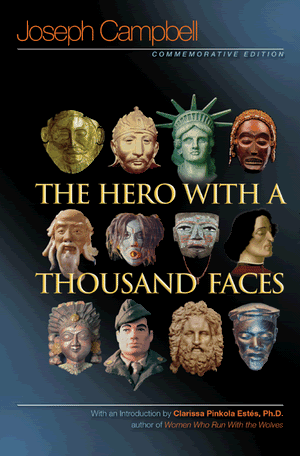
The Hero with A Thousand Faces or The Power of Myth
by Joseph Campbell
If you steer clear of his self-help books and concentrate on what Campbell has done with his examination of the common themes in world myths, stories and folklore, you’ll be amazed at how easily you’re able to find patterns that connect the themes in almost all literature. Also, it gives you the chance to raise your hand in class and say things like, “Well, the way I see it, Huck is really on a modified and somewhat ironic hero’s journey…”

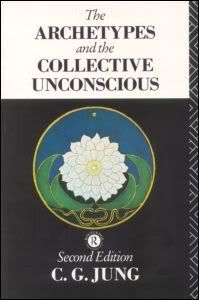
Archetypes and the Collective Unconscious
by Carl Gustav Jung
Campbell owes a lot more to Jung than he admits, and also this is a great way to get ideas for paper topics like “Shadow Figures in Children's Literature” or “Who Is That Masked Woman? The Nature of the Modern Anima as Seen in John Cheever’s Short Works.” Or something.

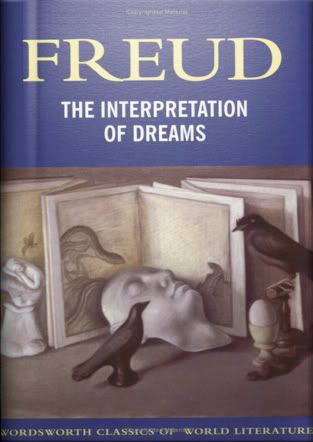
The Interpretation of Dreams
by Sigmund Freud
Haven’t read it, but I plan to as soon as I can wrap my head around the whole notion of sitting down with Freud on my summer vacation. Heh. Anyway, Freud is kind of another perspective from Jung, and I’m willing to bet that anything Jung didn’t cover, or didn’t cover in a way that would help you, Freud did.

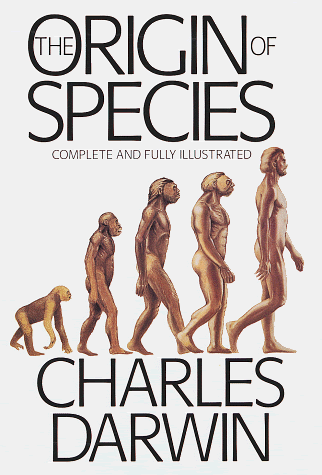
The Origin of Species
by Charles Darwin
Obviously, Darwin’s work had an incredible impact on the scientific, social, and literary realms. Seriously, he started a whole movement of literature called “naturalism” which was all about biological forces and natural selection and the like. So it’s probably good to have.

The Encyclopedia Britannica
Yes, the whole thing. And no, I don’t own it. But even though Wikipedia is faster and much cheaper, professors won’t take Wikipedia as a reliable source. No one is willing to mess with the old EB, though, so use it at will. Also makes for a great conversation starter, as you’ll know facts like that coffee is the second most traded product in the world after petroleum.

Other Works You Might Want:

A good Latin-to-English dictionary
Older works and even some new ones use Latin a whole lot. So you’re going to want this, especially if you’re reading Thomas De Quincey or something.

A good French-to-English dictionary
Same as above; I’ve always found mine useful. Then again, I was also taking French, so it came in handy in other ways.

The MLA Stylebook, Eats, Shoots and Leaves or The Chicago Manual of Style
Anything that will help you with grammatical questions while writing papers. You might be the most brilliant literary mind in several hundred years, but no one will take you seriously if you don’t know the difference between their, they’re and there.