Monday, July 21, 2008

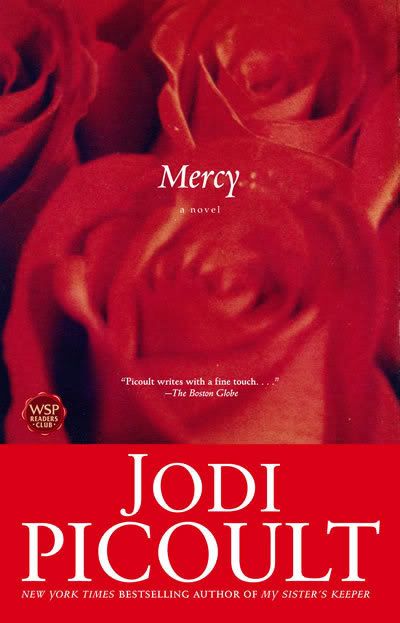
Mercy by Jodi Picoult

Dear Jodi,

Oh, Jodi, Jodi, Jodi. What were you thinking here? I mean, I loved Plain Truth. I even referenced it in another post because I liked it so much. It felt so real, and so researched, and so amazing that I lauded you as the girl who graduated Princeton and became a fantastic writer.

Apparently it didn’t happen that fast. Or you messed up along the way somewhere. Because somehow, you managed to produce Mercy, a book that, while it has some wonderful imagery and ideas, was possessed with the kind of absurdity I would never have expected from you.

Number one, how is it possible for everyone in the town to be related if the protagonist married a woman from his hometown? If he married his cousin, just say so. But it seems like everyone in the town is related except for her, and that gets confusing. It’s a little like asking where Cain found his wife, you know?

Number two, I find it hard to believe that you can so easily translate a Scottish clan leader from the 1700s to a modern-day police chief in a small town. I mean, maybe. But I really think you pushed the Scottish thing too far. These people are American. Their ancestors might have been Scottish, they may have Scottish heritage, but none of them should be breaking out into brogues. Which, unfortunately, the main character does more than once. This being a man who lived in Scotland only briefly, twenty years ago.

Number three, the affair? Ugh. What in God’s name were you trying to do there? The main character’s affair was everything the relationship in Plain Truth was not – overblown and characterized with a passion that I am pretty sure you stole out of that month’s Harlequin Romance. The flowers were a nice touch, but not enough to rescue it.

Finally, and I hate to say this, but you managed to make me hate almost every character in this book. The main character was a jerk and a cheat and a fake, his wife needed to grow a pair, his lover needed to get over herself and stop being so bloody free-spirited, his cousin needed to come to terms with the fact that even though he killed his wife out of love, it’s still a murder, and his cousin’s wife needed to realize that perhaps asking her husband to kill her might have some unpleasant consequences for him. Like jail time.

That’s not to say that they were badly drawn, I’m just saying, I wanted someone to root for. I did like the lawyer, though, so well done there. (Side note: All your lawyers are sympathetic, and at least one is really heart-wrenchingly hot. Are you perchance married to a lawyer?)

I’m glad you’ve changed and grown since this, Jodi. I can only hope that My Sister’s Keeper is better, proving that Plain Truth is a true representation of your work, and not just a fluke.

Thursday, July 3, 2008

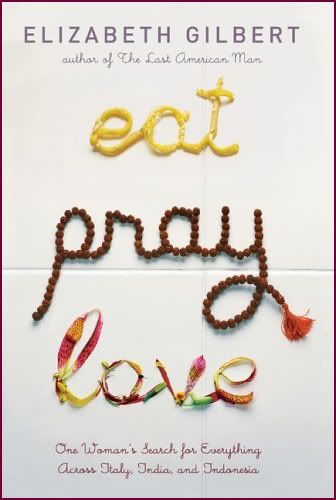
Eat Pray Love By Elizabeth Gilbert

So Sofie and I have come to Pizzeria da Michele, and these pies we have just ordered—one for each of us—are making us lose our minds. I love my pizza so much, in fact, that I have come to believe in my delirium that my pizza might actually love me, in return…

Like all great philosophical ideas, this one is simple to understand but virtually impossible to imbibe. OK—so we are all one, and divinity abides within us equally. No problem. Understood. But now try living from that place…

But I was always coming here. I thought about one of my favorite Sufi poems, which says that God long ago drew a circle in the sand exactly around the spot where you are standing right now. I was never not coming here. This was never not going to happen.

See, this is why I love Penguin Books: because they print books like this. There are so many reasons to love this book that I can’t even think where to start. Elizabeth Gilbert in an Italian cafĂ©, wishing an Italian friend would kiss her. This is as good a place as any, since at its heart, this book is basically about a woman who has a passion for travel and an infatuation with life—or is it the other way around?

In the introduction, Gilbert explains that her book is made of 108 short episodes, divided into three sections containing 36 stories each, all of which were written in her 36th year. The quotes above include one quote from each section, starting with Italy, the next from India, and the next from Indonesia.

Now, I don’t consider myself an excessively superstitious person, or even overly obsessive-compulsive, but I have to admit there is something reassuring about a logical structure based on a number that is held to be sacred (or at least very important) by at least two world religions. And it's my favorite number, so that counts (har har) for something, I guess.

So I was already sold by page two. But then Gilbert talks about how she got to Italy—the divorce, the depression, the affair, the yearning to speak a language that makes her feel sexy again. And, in addition, how she has chosen three countries (Italy, India, and Indonesia) to help her regain her sense of who she is and how she should be living her life.

It’s clear that Gilbert has found out who she is—her voice is not only strong and clear throughout, but amazingly likeable. Even though she obviously has some extensive financial resources, judging by her ability to take a year off and travel, she never name-drops about her employment or gives off the tiniest air or superiority.

The book reads like your friend Liz invited you over for a cup of coffee and you two had a conversation about some amazing things she did. Never preachy, always enjoyable, and often life-altering, this is one of the few books I know will go with me wherever I end up.

Wednesday, June 18, 2008

And for my next trick...

Okay, folks, here's what's coming as soon as I get my life together:

* Water for Elephants by Sara Gruen
Kindly lent by my little sister, and so amazing I read it in a day.

* Eat Pray Love by Elizabeth Gilbert
Picked up at Wal-Mart yesterday, and so great I find myself nodding along as I read like she's talking to me. I'm way excited about this one.

* Mercy by Jodi Picoult
Mom's choice at Wal-Mart, but it looks pretty good. Apparently there's some sort of trial in this one as well? Not sure.

* Edith Hamilton's Mythology, if I can find some way to do a review on it. It seems like I am going to need a different sort of format. Maybe not a review so much as a pondering, or a list of all the non-literary books English majors need to have in their libraries.

* Any suggestions, which will be put into action as soon as I get a paycheck and can get on Amazon. Don't hold your breath, as my debit card just expired and I'm supposed to be saving money for Ireland. Heh.

EDIT: Not so much on the Mercy, folks. I tried, but around the time the main character slipped into a Scottish burr--mind you, the man has barely been to Scotland--I stopped. Maybe I'll try again later, but don't expect a stunning review.

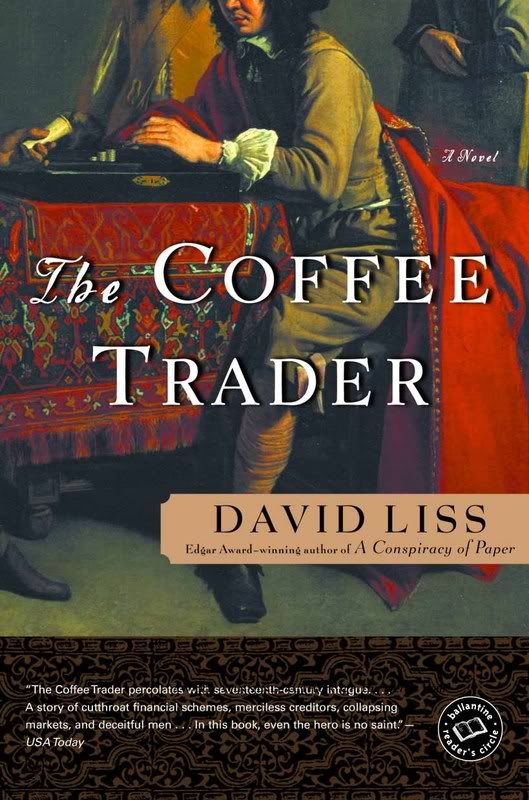
The Coffee Trader by David Liss

“This coffee isn’t like wine or beer, which we drink to make merry or because it quenches thirst or even because it is delightful. This will only make you thirstier, it will never make you merry, and the taste, let us be honest, may be curious but never pleasing. Coffee is something…something far more important.”

This book is every caffeine addict’s wet dream. Sorry for that graphic image, but 386 pages of a high-stakes fictionalized historical account of how coffee came to Europe cannot be described any other way.

Every single character drinks, as well as sleeps and breathes, coffee. Coffee is described as this miraculous, almost magical, drink that makes failed men successful, virtuous men backstabbing, and submissive women full of spunk. The book has this kind of nervous, jumpy, impatient feel that makes me wonder how much coffee David Liss was drinking at the time – but the novel is all the better for it.

Unfortunately, the main character’s scheme to bring coffee to Amsterdam involves a financially risky and rather complicated set of plans to manipulate The Exchange, 17th century Amsterdam’s version of the stock market. This means a great deal of financial talk, a lot of complicated language revolving around “puts” and other things that totally went straight over my head – all three times I read it, so it’s not like I just read too quickly.

But if you’ve got the mindset for finance, the novel would probably be even better. Even if you don’t like finance at all, there are still plenty of interesting characters and historical idiosyncrasies to keep you amused. There’s a woman who grows up Catholic and discovers she’s a secret Jew, a Jewish man who lived through the Inquisition, a widow and her manservant who are both more and less than what they seem, and a very strange, possibly mad, Dutchman who inexplicably speaks Portuguese. And all of the above are connected by coffee.

David Liss has also written two other books concerning historical intrigue: A Conspiracy of Paper and A Spectacle of Corruption. Maybe if you have no interest in the stock market, even historically, these would be a better choice?

Monday, June 9, 2008

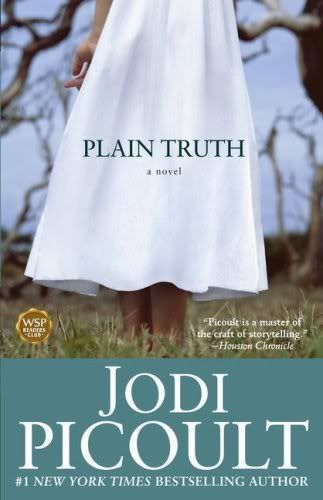
Plain and Simple

“There’s no way for me to make you understand what it means to be Plain, because most people can’t see past the buggies and the funny clothes to the beliefs that really identify the Amish. But a murder charge—well, it’s an English thing.”

My mother reads a lot of books about Amish people, and I don’t know why. They all seem to involve a young man and a young woman who fall in love, but one is an Englischer and one is Plain so their romance is impossible. Sometimes the woman has been shunned from the Order and falls in love with an English man, only to realize that she’s really Plain at heart. Usually someone comes to the Lord.

So when my mother plunked Plain Truth down on my dresser (on top of the baked good mysteries), I teased her mercilessly. It wasn’t until I read that Jodi Picoult has an A.B. in Creative Writing from Princeton and a master’s from Harvard that I started to gain some respect for her.

If everyone who comes out of Princeton can write like this, I think we should round up all those romance novelists and make them take a few courses. Picoult takes the reader into the center of Amish culture and exposes the humanity behind all the rules and restrictions. The woman could have been a journalist, with all the research that must have gone into this book, and the realism with which she paints everyday life in a Plain community. That being said, I’m glad she decided to be a novelist.

The plot is good. I am used to being able to guess what the outcome of any given book is going to be, with the exception of Gentlemen and Players by Joanne Harris and a few select others. And while there were hints through Plain Truth about the real story behind the dead baby in the barn, I have to say, I was stunned when I discovered what happened. Picoult says in the readers guide that she found it really challenging not to have the end be a Scooby-Doo moment – to place tiny clues throughout the narrative so the conclusion made sense. I don’t think she should have worried, because she did it absolutely perfectly.

The characters aren’t bad, either. I liked Ellie, the big-city lawyer, and her psychiatrist friend/lover, Dr. Cooper (he of the coffee and peppermint gum, who goes by the inane nickname of Coop throughout the entire novel). What I loved about this pairing was that Picoult was keenly aware of whenever she was on the edge of a too-soppy moment.

In one courtroom scene where Ellie has Coop on the stand and they begin talking about their relationship through the guise of the case, in a way that is perhaps a little overdrawn, the judge wryly asks Ellie to please change the channel from As the World Turns back to The People’s Court. It’s that kind of self-awareness that keeps Picoult from being just another feel-good women’s fiction writer.

I liked the sympathy Picoult has for her other characters, too, including the Plain boyfriend of the woman who had the baby in the barn, who easily could have been just a dolt or a kind of Amish jock – handsome, but nothing in his head. Picoult gives him feelings and ambitions and an amazing sense of humanity, especially once he’s on the stand in the courtroom.

This is most definitely the best book my mother has made me read so far. While I’m not sure if I’d read it over again (though I probably would), I am definitely going to be on the lookout for more of Jodi Picoult’s books – and I’ll be less hesitant next time Mom tries to make me read something. Maybe.

You know you're single when...

I am turning into a bitter old woman, and here’s how I know: I couldn’t finish the three cheap romance novels I meant to read for the post today. Sure, I read the first two. But somewhere between starting the third and viewing 27 Dresses, my will to suffer through another overwrought, unrealistic romance disappeared, only to be replaced with a raging cynicism that is singularly unattractive.

The first romance novel I read was The Husband She Never Knew, about a girl named Vicki (as in vixen, in case you didn’t get that) who married an Irish guy who was desperate for a green card. When she later wants to marry a dashing and yet slimy antiques dealer, her previous marriage causes problems. Somewhere in the middle there are a storm and a twisted ankle, incidents that end in Vicki and Irish Man making tender, yet impassioned love on a sailboat.

The second one was called Wife for a While, in which Chelsea, or “Chels” as she is affectionately referred to, offers to marry Ben so he can keep his grandfather’s apple orchard. The only condition is that she wants a baby in return, and then of course he objects to being treated like a sperm bank, so they make tender, yet impassioned love on a couch, I think. Bonus points to Ben for refraining during her period (yuck).

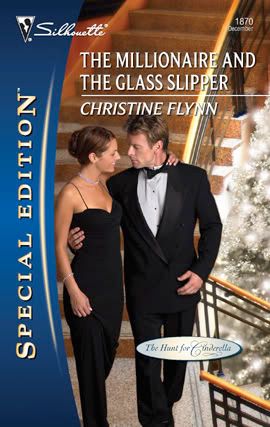
In the third, called The Millionaire and the Glass Slipper, was about a millionaire who has to find someone to marry him or lose his share in his father’s business. The only catch is that she can’t know he’s J.T. Whatever, and she has to marry him for love. This is the one I didn’t finish, but I am sure that J.T. and Amy (the plain younger woman he falls for instead of her sophisticated polished stepsister) make tender, yet impassioned love on a yacht or in his office or something.

And that’s where I stopped. Because I cannot imagine that there are women out there who are so deluded or so lonely that they actually believe these plotlines and these men. First, there are simply not that many men out there who have to get married to save a large sum of money. Second, I refuse to believe that romances like these exist in real life.

There are fictional romances I can get behind, don’t get me wrong. There are higher-end romance novels that are not too shabby, and I'll admit to reading and enjoying Nora Roberts from time to time. As for romance in other types of novels, there’s a moment in the next book I’m going to review where the protagonist describes the guy she’s after as smelling like coffee and peppermint gum. I can believe that – coffee because it’s morning, the gum because stale coffee breath isn’t attractive. The fact that she noticed this fairly everyday scent (not aftershave or a vague ‘man smell’ that I can only assume is made from sperm and Axe) and found it attractive is even better.

But when every single man in these other novels is so clearly a figment of some uncreative female fantasy, described as rugged, yet somehow polished; dignified, yet somehow wild; and gentle, yet somehow untamable in bed, I can’t believe that. I can barely dignify it with a response, though clearly I managed to rise to the occasion.

The fact remains that I can only suspend my disbelief for so long. Maybe I could have finished the one about the millionaire had I not been forced to watch the travesty that was the character of Kevin Doyle -- who, by the way, is about as realistic as Superman. Find me a journalist who isn't fat, doesn't live off of cheese doodles, has time to follow women all over the city, dresses that well and can still afford to give away Blackberrys, and then I'll be happy to recant. Good luck.

Sure, the men in romance novels and romantic comedies are designed to make women fall in love with them, and I’m sure many women do. But not this bitter old crone, who has these novels to thank, not for some satisfactory light reading or even an amused laugh at the poor quality of the writing, but for a bitter taste in her mouth that even a whole pack of Stride isn’t going to get rid of.

Saturday, June 7, 2008

The Cookie Jar Mysteries

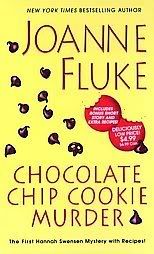
I have been known to read the odd mystery, which is why I didn’t balk when my mother dumped three of Joanne Fluke’s novels on my bed and demanded I at least look at them.

And look I did, because if there’s anything I love more than a mystery, it’s a mystery that involves food. And since all of Fluke’s works have the word “Murder” combined with some sort of baked good in the title, I figured they were worth a shot. And, lucky for you, three books means a triple review.

Chocolate Chip Cookie Murder

The thought struck Hannah like a lightning bolt of dread. Bill had told her to be careful about asking questions and she thought she had. But what if the killer had the misguided notion that she was hot on his tail?

I’m a little mystified (har har) about the title of the book. The murder victim was found with chocolate chip cookies scattered about, yes, but that’s a minor detail and they had nothing to do with the death, so why do they get such a place in the title? That aside, though, the book really wasn’t bad.

This is the first in the series, and though some of the characters are a little shallow and Fluke’s idea of an attractive male character involves a mustache, it wasn’t bad. The small-town atmosphere was cute, the requisite romantic entanglements and a miraculous transformation from frumpy to sexy were all there, and I actually grew to like Andrea, the protagonist’s sister, very much.

Hannah Swensen herself isn’t bad either, as female detectives go. Not as witty as Amelia Peabody Radcliffe and not as sexy as Rei Shimura, Hannah seems like a genuine human being with her own set of problems (including a stunning caffeine addiction). I’ll always take a realistic coffee-swilling baker over an international detective who falls into bed with two to three different men in every book.

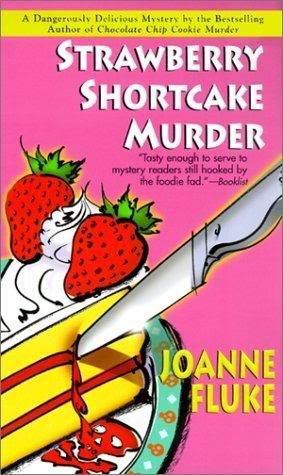
Strawberry Shortcake Murder

Same dilemma about the title, frankly. Murder victim found with his face in a plate of Hannah’s strawberry shortcake – recipe included! Side note, my mother tried this recipe and hated it, which is probably good because I don’t know how I’d feel about eating shortcake knowing that the victim in the book had bled all over a similar piece.

But I digress. I liked Hannah even better in this book, though I think if Fluke is going to try to have this sexual tension involving the two men in her life, she needs to make sure it’s clear that Hannah actually likes both of them. The more handsome prospect is so overwrought as to be laughable, and the other, balder man seems like he’s never really going to be more than a friend.

The plot wasn’t badly executed, though, and it kept me interested through most of the book. I do think that Hannah, being the detective she is, would not have so easily missed those last few clues that led to the murderer’s capture, but I see why Fluke needed to make Hannah momentarily stupid. Clumsy writing, yes, but also understandable.

Carrot Cake Murder

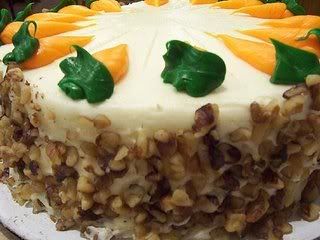
Possibly this woman needs to stop handing out baked goods. This time, she gives a few slices of carrot cake to a man who is later discovered with an ice pick in his chest. Yikes.

What struck me most, though, about this particular book is the amount of times Fluke seems to introduce a topic just to show off the trivia she knows. I noticed it a little bit in both Chocolate Chip Cookie Murder and Strawberry Shortcake Murder, but it came out in full force in this book around page 44, where Fluke takes a whole half page to talk about the weights of regulation and practice hockey pucks, as well as the different types of hockey pucks and what they are used for. All this while Hannah’s phone is ringing and her cat is running around inside the bathtub like a whirling dervish. Am I supposed to believe that anyone would take that kind of time to ponder sports equipment, especially at that particular point?

The series as a whole is definitely worth checking out and reading, if not re-reading. There are 10 total books in the series, starting with Chocolate Chip Cookie Murder and ending with Carrot Cake Murder, so far as I’m aware, but there might be more. Not sure if the recipes are any good, though – I’m dying to try the Scandanavian Almond Cake from that last book, but my mother’s attempts at Fluke’s recipes didn’t yield great results. Possibly they’re more of a gimmick than anything else.